Optimise sporting performance with a training plan and Workouts Wizard. Achieve better results with structure and progression.
Before we look at which is better, let us first clarify exactly what we mean. When you enter a gym or physiotherapy practice, you can often choose between different ways to train your body, such as cardiovascular training (also known as cardio), group classes and strength training. This article will focus mainly on the last of these, because strength training itself can be divided into different types. You can train with bodyweight, free weights or machines. But which is easiest, most effective or safest? We will help you in this article so you can get the most out of your strength workouts.
Bodyweight training
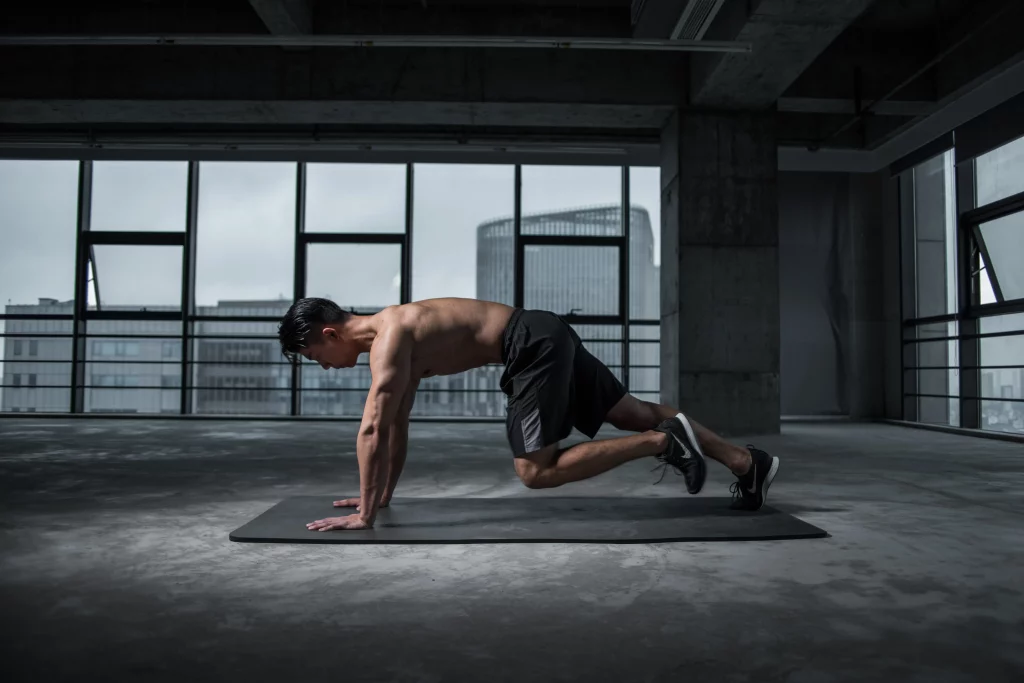
Bodyweight training is a popular form of exercise that uses your own bodyweight as resistance. It is an effective and versatile training method for building strength, endurance and flexibility. Bodyweight training lets people exercise anywhere without needing large spaces or expensive equipment. From simple exercises such as push-ups and squats to more complex movements such as handstand push-ups and pistol squats, this method uses various movement patterns to strengthen muscles. By engaging several muscle groups at once and mimicking natural body movements, bodyweight training helps build functional strength. Both beginners and advanced exercisers can achieve their fitness goals with this method.

Benefits of bodyweight training
There are many benefits to bodyweight training, but the biggest is that you can do it almost anywhere. You do not even have to be in a gym; you can also train at home or in a park! You also need very little equipment. You do not need dumbbells or barbells because you do everything with your own bodyweight.
Drawbacks of bodyweight training
One major drawback of bodyweight training is that it becomes increasingly difficult to challenge your body and apply progressive overload. Unless you gain a few kilos every week, it is very hard to train with more weight. You can compensate by doing more repetitions or choosing harder variations. It is also difficult to train the posterior chain and legs. The posterior chain includes essentially all the muscles on the back of the body, from the rear delts or posterior delts (back of the shoulders) to the calf muscles and everything in between. These posterior chain muscles cannot be trained well with bodyweight alone, so weights really are needed for them.
Training with free weights
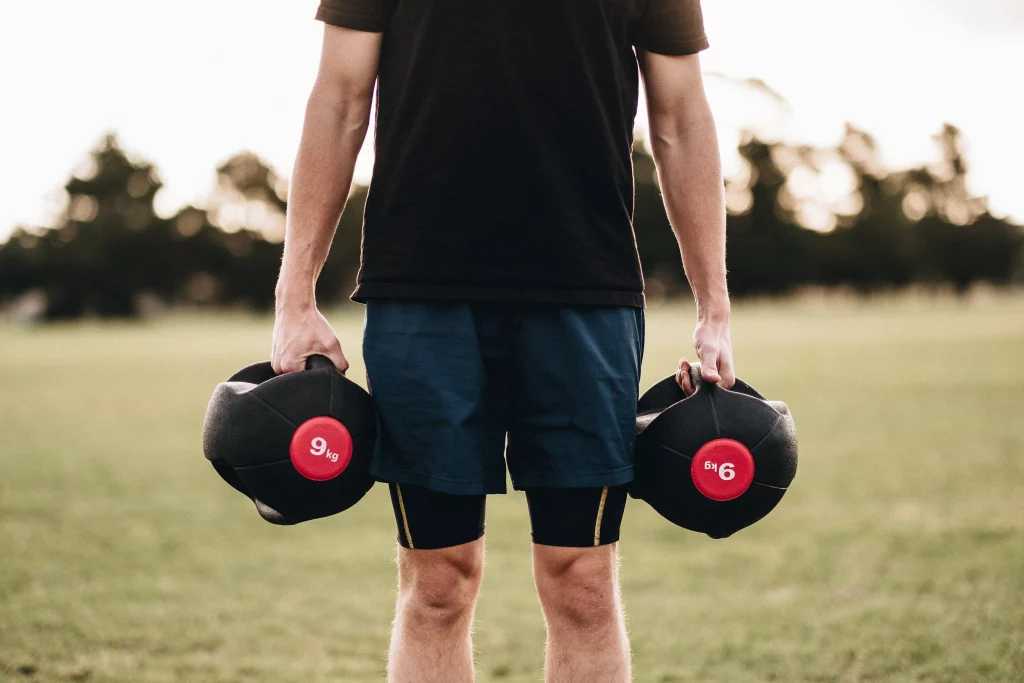
Training with free weights is a widely used method of building strength and muscle mass. This method uses weights, dumbbells and barbells as resistance for various exercises. Free weights offer flexibility and adaptability to individual needs and progress. Training with free weights allows you to focus on strengthening specific muscle groups and improving strength, muscle definition and stability. Compound exercises such as squats, deadlifts and bench presses can be performed with free weights, engaging several muscle groups at once. Good technique and body control are important in this type of training to prevent injuries. Gradually increasing the load and listening to your body are also essential. Discover how effective free weight training can be for building strength and muscle mass, and achieve your fitness goals with this widely used training method.
Benefits of training with free weights
The biggest benefit of training with free weights is that you use more than just the primary muscles. Most exercises also use stabilising muscles to lift the weights. The way free weights train your muscles also transfers more readily to everyday life, for example lifting or moving heavy furniture. Free weights also make it easy to adjust your grip or position, allowing you to train your muscles from a slightly different angle.
Drawbacks of training with free weights
There are actually few, if any, drawbacks to training with free weights. However, if you are a beginner and do not know exactly what you are doing, your risk of injury is somewhat higher than when training with machines. It is therefore very important to master the technique when training with free weights, particularly heavy ones. Having trouble, or unsure how to do it? Ask for help! Even if your gym has no personal trainers or physiotherapists, there is always someone who can help you with a particular exercise. You can also use the Workouts Wizard app. Each exercise includes an animation showing how to perform it, followed by a full written description that explains what to do step by step.
Training with machines
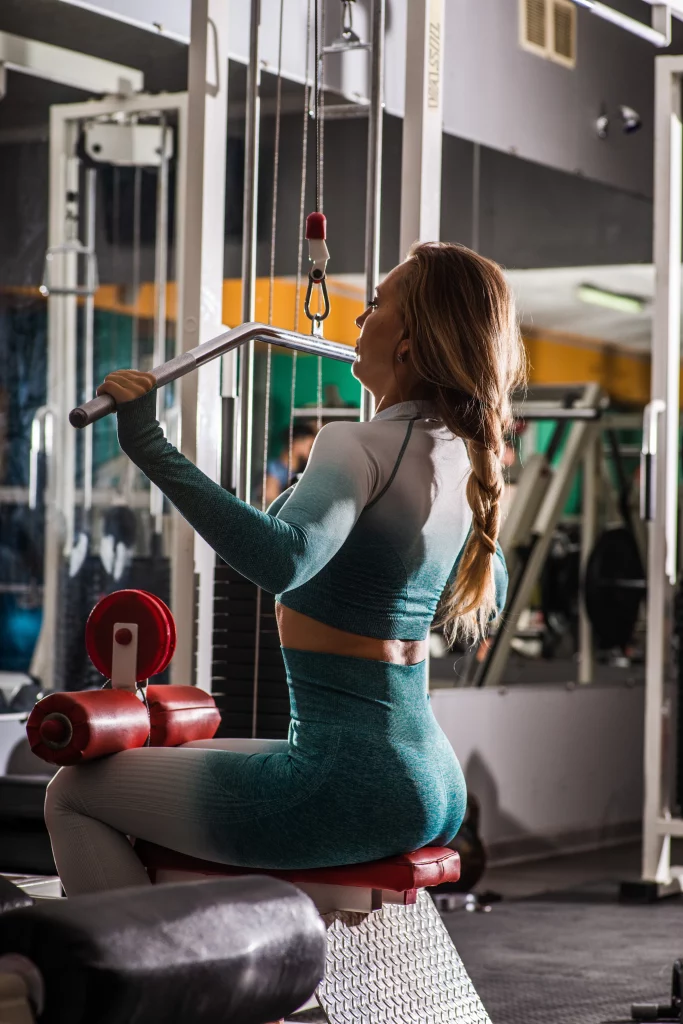
Training with fitness machines is a popular method of building strength, muscle mass and fitness. This form of training uses specially designed machines that provide resistance while you perform exercises. Fitness machines are designed to target specific muscle groups and often have adjustable weights and seats to suit individual needs. Machines allow exercises to be performed in a controlled, isolated way, focusing on specific muscle groups and improving strength and muscle definition. These machines often offer structured, easy-to-follow training, which can be ideal for beginners or people who prefer a guided approach to their fitness routine. Training with fitness machines can be an effective way to work different muscle groups and improve overall fitness. Discover the possibilities and results that machine training offers and achieve your fitness goals in a structured, controlled way.
Benefits of training with machines
Training with machines is particularly suitable for beginners. Most machines have instructions and, because the movement is often fixed, it is almost impossible to perform the exercise incorrectly. The exercise is also often much easier to perform than a bodyweight or free weight exercise, because the machines remove the technique element. This also means you generally sustain fewer injuries. Machines also make it very easy to isolate muscles. This means training one specific muscle or muscle group without involving other muscles. It also makes machines very helpful for people who have suffered an injury.
Drawbacks of training with machines
There are actually few drawbacks to training with machines. The only major drawback is that the movement and the weight’s path are fixed. As a result, you train the stabilising muscles much less than you do with free weights and bodyweight exercises. Machine training also rarely provides functional training that transfers to everyday life, because you do almost exclusively isolation exercises. This can be an advantage, but also a drawback when it is not what you want. It really depends on your training goal.
So what is the best way to train?
The different forms of strength training all have their own advantages and disadvantages. But which is best? This depends more on the person and the purpose of the training than on a ready-made answer that applies to everyone. Want to become generally fitter and feel strong throughout your body? Then bodyweight strength training is for you. Want to look more muscular or give a particular muscle group more attention? Then machines or free weights are more suitable. Choose machines if you consider yourself a beginner, or if you have had an injury and want to rehabilitate. Choose free weights if you have a little more experience or want to train with guidance. Finally, of course, one method does not rule out another. You can combine all three in a single workout, training with bodyweight, machines and free weights!