
Workout description
Full body workouts are always popular, and always will be.
Many bodybuilding athletes, such as Arnold Scharzenegger and Ronnie Coleman, used this training approach as a solid foundation for their muscular physiques.
These training plans are so effective because you can train hard and achieve results by exercising 3 times a week. This approach also allows optimal recovery between training sessions.
The full body workout suits every level. Beginners will progress at lightning speed, exercisers with some gym experience will continue to see progress, and even advanced exercisers will maintain their size and slowly build a solid foundation with a full body workout.
In this training plan, we will cover the 5 most important exercises you should include in your full body workout. We will then give you a perfect full body workout plan to achieve your fitness goals.
Finally, we will answer the most frequently asked questions about full body workouts.
Workouts Wizard App
Create your own training plans or use 1 of our hundreds of plans, and track your own progress!
For Personal Trainers
Personal trainer software to create training plans for clients and track their progress.
The 5 best exercises for a full body workout
Choosing the right exercise is very important for an effective full body workout. Especially when time is limited, choose the exercises that will help you most.
The best way to do this is to include compound exercises in your workout. A compound exercise involves moving through a full range of motion using several joints. You therefore always train several muscles at once with a compound exercise. This also means you burn more calories during your workout.
The 5 exercises we have selected for you may be the very best exercises you can perform. We have listed their best-known variations, but most can be performed in many different ways. Experiment yourself, or discuss with your Personal Trainer which variation best suits your fitness goals.
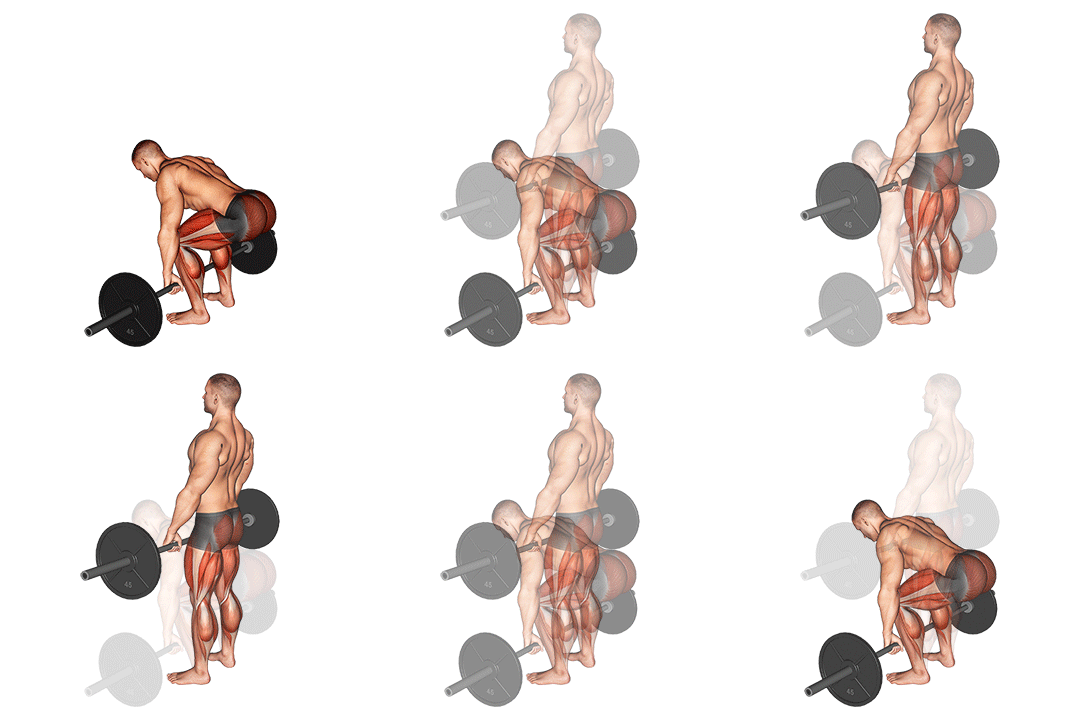
1. The deadlift
The deadlift is undoubtedly the king of exercises and a must for every exerciser. It works your hips, legs and back muscles hard and is essential for a strong, healthy body.
This is one reason why the deadlift appears in many training plans you find online. That said, not everyone may feel comfortable with the conventional deadlift. Fortunately, there are plenty of variations to replace it, and many people have no trouble finding a variation that suits them better.
The most popular variation among beginners is the trap bar deadlift, because it places you in a much more favourable position than the conventional deadlift. Struggling to find the right deadlift variation? Ask a Personal Trainer for advice, or look in our app, where you may find a variation that suits you!
2. The squat
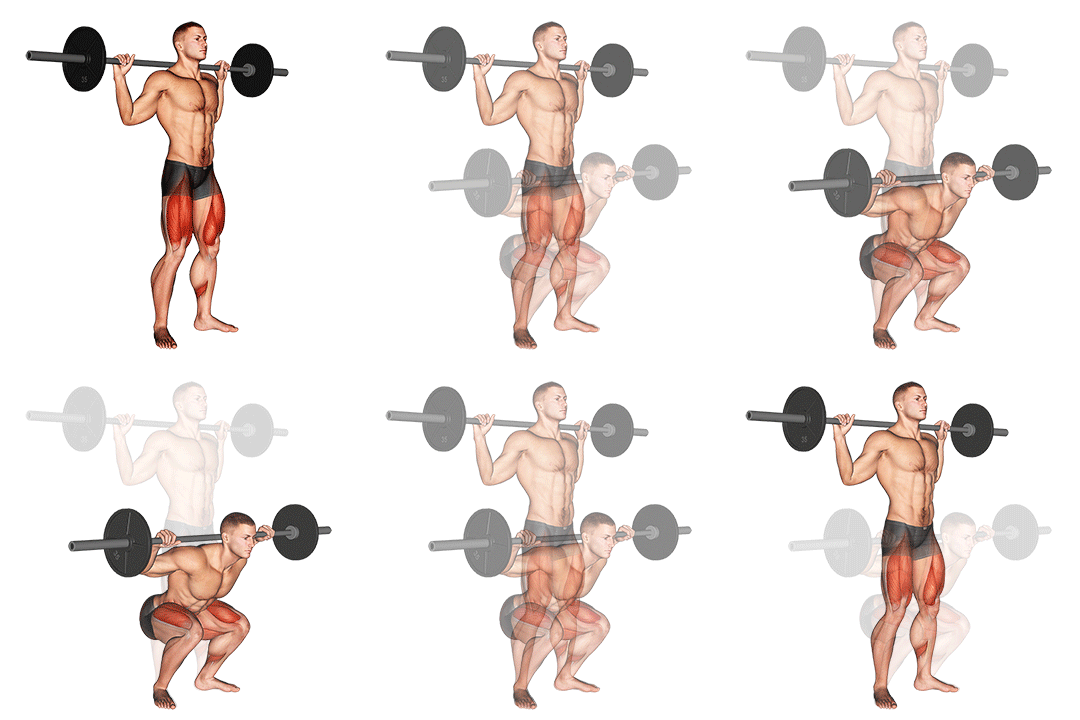
The squat is another classic found in most online training plans. This is also a compound exercise that trains a very fundamental movement pattern. Like the deadlift, the squat requires considerable mobility, and it is important to master the technique before performing it with more weight.
The most popular squat variation is undoubtedly the Barbell Back Squat. It is also one of the more advanced variations, so if it is a little too demanding, start with an easier squat such as the Goblet Squat.
The squat is the go-to exercise for your lower body. Simply performing it correctly will help your quads, hamstrings, glutes and calves all grow. Because it is one of the harder exercises to perform, adding it to your training plan will also burn plenty of calories.
3. Bench press
To train the rest of your body, it is useful to add some pushing exercises to your plan. Unfortunately, for some people, particularly beginners, it is easier to focus on pushing exercises while often leaving out higher-priority exercises.
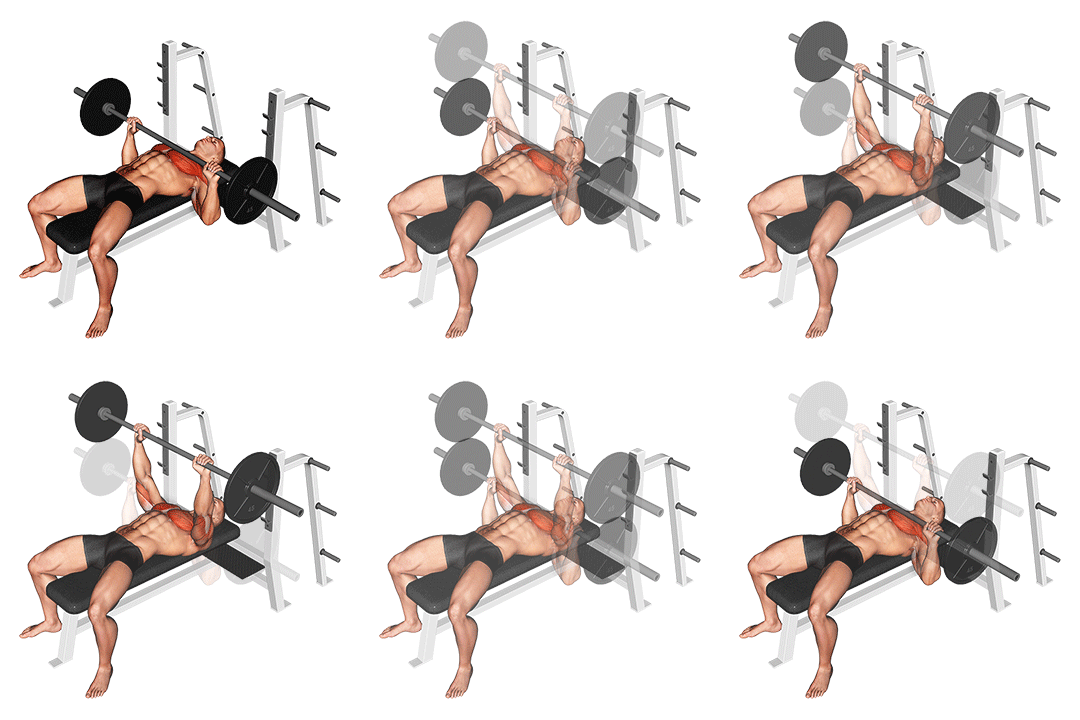
That said, training these movements is important too. The horizontal push is an important component, and bench pressing is the easiest way to address it very efficiently.
If your shoulders or elbows start to hurt, this could mean two things. Perhaps conventional bench pressing is not for you. Everyone has a different build, and bench pressing may not be optimal for yours. Try to find a variation that suits you better than the conventional approach. Although this may be an issue, it is more likely that you are not performing the exercise entirely correctly. As with the squat and deadlift, mastering technique before lifting more weight is therefore very important.
Bench pressing mainly trains your chest, but your shoulders, particularly the front delts, and triceps also receive plenty of attention.
4. The row
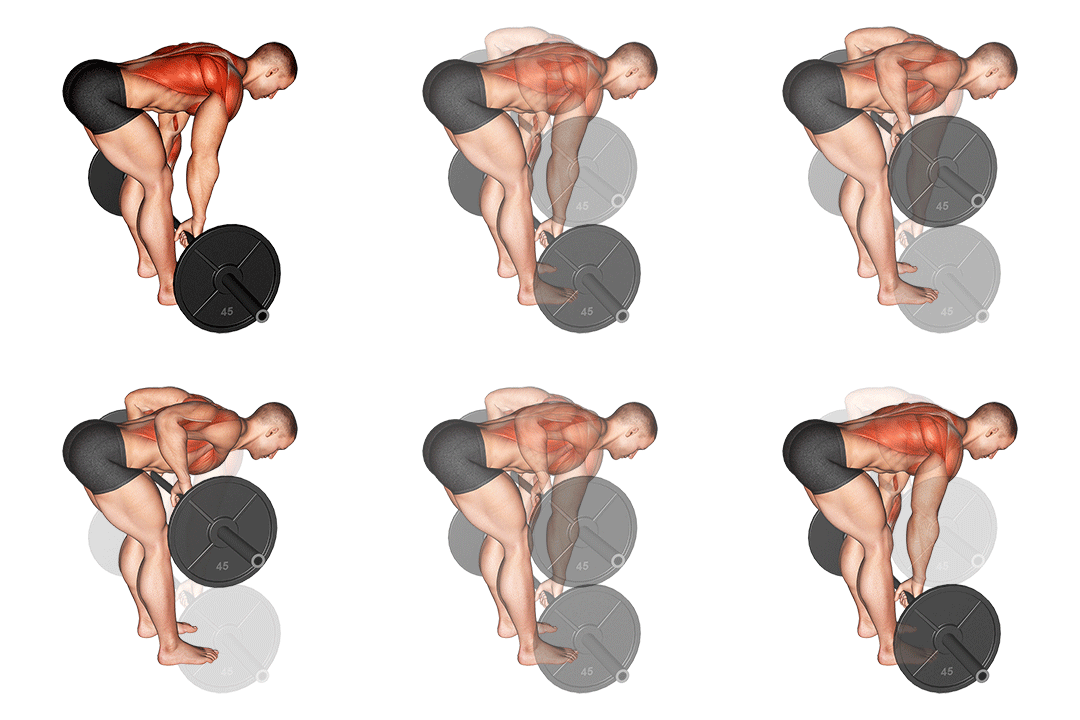
The Barbell Bent Over Row is one of the most underrated exercises around. But there is a reason most bodybuilders keep doing it consistently: it is key to training your back muscles.
If you want the familiar V-shaped back, it is important to perform this exercise correctly. The better you perform it, the faster you will achieve the desired results.
For many people, this exercise causes no problems and carries a very low injury risk. If you do not find it comfortable, there are plenty of alternatives. For example, you can perform it with dumbbells or even split it up by training the left and right sides separately.
5. The overhead press
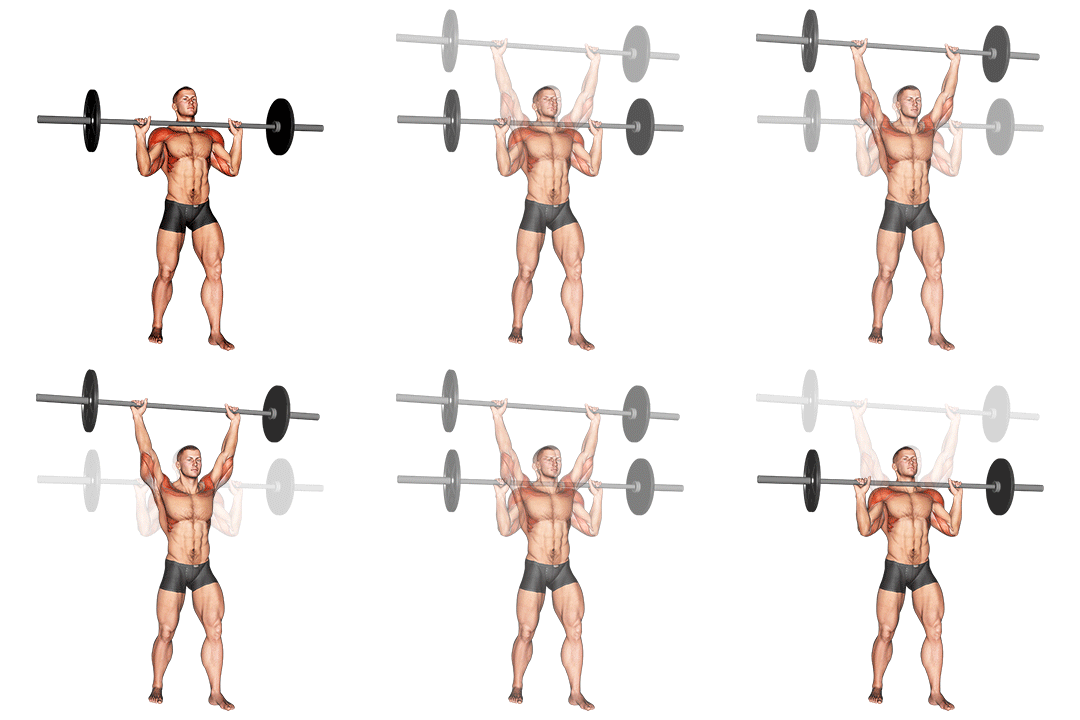
Finally, a movement that no true full body workout should omit: the Overhead Press. The Overhead Press trains the important vertical pushing movement.
The Overhead Press mainly trains the shoulder muscles, but also works the triceps well. It also requires considerable stability, so the smaller shoulder muscles are trained to the full during this movement.
Perfecting this movement ensures your shoulders are trained to their limits and helps build a strong, solid core.
Again, the Barbell variation may not suit everyone. This movement may feel uncomfortable in your shoulders or elbows. If that is your problem, there are 2 solutions, just as with bench pressing. Your technique may not be entirely correct, so make sure it is sound before lifting more weight. If technique is not the issue, try an Overhead Press variation that suits you better.
Before you start the full body workout
The following training plan focuses mainly on building strength and size for beginners and early intermediate exercisers. It is designed to train all major and minor muscle groups for maximum growth using progressive resistance. This primarily means that the weight, or potentially the number of repetitions, increases over the course of the workouts.
For this plan, train 3 times a week, with at least 1 rest day between sessions. For example:
- Monday (Day 1)
- Wednesday (Day 2)
- Friday (Day 3)
Feel free to change this yourself, provided you keep at least 1 rest day between training sessions.
What is a ramping set?
The following plan uses ramping sets. But what are they? Ramping sets, also known as warm-up or feeder sets, prepare your body for what is coming. They warm up your joints, muscles and nerves before you begin your actual working sets. Essentially, you warm up using the exercise you are about to perform. During these sets, focus mainly on correct technique rather than how much weight you can lift.
How do you handle ramping 5×5 sets?
The first 2 sets in a ramping 5×5 sequence are warm-up sets. The weight you use for these sets is based on the final weight you will use during your workout. It looks roughly like this:
- Set 1 – 60% for 5 repetitions
- Set 2 – 80% for 5 repetitions
- Sets 3 to 5 – 100% for 5 repetitions
So if you want to use 100 kg for sets 3 to 5 of an exercise, your workout looks like this:
- Set 1 – 60 kg for 5 repetitions
- Set 2 – 80kg for 5 repetitions
- Sets 3 to 5 – 100kg for 5 repetitions
Ramping sets for deadlifts
The ramping sequence for deadlifts differs slightly from the other exercises in this plan. Deadlifts have only 3 sets, but you still want to use the 2 warm-up sets. The sequence therefore looks like this:
- Set 1 – 60% for 5 repetitions
- Set 2 – 80% for 5 repetitions
- Set 3 – 100% for 5 repetitions
Ramping sets for squats on day 3
If the squats on day 1 were manageable, try adding 2,5 kg to the squats on day 3. Here is how that looks:
- Set 1 – 60% for 5 repetitions
- Set 2 – 80% for 5 repetitions
- Set 3 – Day 1 weight + 2,5 kg for 5 repetitions
How much weight should I use per exercise?
For a given exercise, use the same weight for your final sets. When you feel in control of the weight, add another 2,5 – 5 kg to the barbell. Always try to focus on progress, so add a few extra kilos when you are ready. Take care not to lift too much too soon. Always ensure the weight does not compromise your technique during the exercise.
How much rest should I take between sets?
For major compound movements such as squats, deadlifts, bench presses and overhead presses, taking a little more rest is important. Rest for 2 to 3 minutes before beginning your next set. For other exercises, 60 to 90 seconds of rest is fine.
The full body workout
Day 1
| Exercises | Sets | Repetitions |
|---|---|---|
| Squats (ramping) | 5 | 5 |
| Bench Press (ramping) | 5 | 5 |
| Barbell Row (ramping) | 5 | 5 |
| Upright Row | 3 | 10 |
| Skullcrushers | 3 | 10 |
| Dumbbell Curls | 3 | 10 |
| Leg Curls | 3 | 12 – 15 |
| Ab Wheel Roll Out | 3 | 10 – 15 |
Day 2
| Exercises | Sets | Repetitions |
|---|---|---|
| Deadlifts (ramping) | 3 | 5 |
| Romanian Deadlift | 2 | 8 – 12 |
| Seated Overhead Press | 3 | 8 – 10 |
| Pull Ups or Inverted Rows | 3 | 10 – 15 |
| Dips | 3 | 10 – 20 |
| Barbell Shrugs | 3 | 10 |
| Standing Calf Raise or Seated Calf Raise | 3 | 12 – 15 |
| Plank | 3 | 60 seconds |
Day 3
| Exercises | Sets | Repetitions |
|---|---|---|
| Squats (ramping) | 3 | 5 |
| Squats | 1 | 20 |
| Incline Dumbbell Bench Press | 3 | 10 |
| Dumbbell Row with 1 arm | 3 | 10 – 15 |
| Cable Triceps Extension | 3 | 10 |
| Barbell Curls | 3 | 10 |
| Leg Curls | 3 | 12 – 15 |
| Ab Wheel Roll Out | 3 | 10 – 15 |
Workouts Wizard App
Create your own training plans or use 1 of our hundreds of plans, and track your own progress!
For Personal Trainers
Personal trainer software to create training plans for clients and track their progress.
Frequently asked questions (FAQ)
1. Can you do a full body workout every day?
Certainly! However, it will not offer much benefit for most people.
People who do a full body workout every day are usually preparing for competitions. If you simply want to improve your body and/or health, a full body workout 2 to 4 times per week is more than enough.
If you think training more often will bring faster results, think carefully. Building muscle, getting stronger and losing body fat take time. It is an ongoing process requiring consistent dedication. Rest is also very important, and insufficient rest will only hinder your training.
Instead of choosing to go to the gym every day, you can improve other areas, such as nutrition, sleep and rest days. Growth does not happen only in the gym.
2. How often per week should you do a full body workout?
This plan requires 3 full body workouts per week. That falls neatly within the range above and will lead to major progress for most people.
Start gently. Improve your lifts. Pay close attention to technique. Build strength and muscle mass gradually over the years. If things stop working or you no longer see progress, consider whether it is time for a new plan or changes to your current one.
3. How long should a full body workout last?
This depends entirely on the total amount of work performed in a session. Most full body workouts generally take somewhere between 45 and 90 minutes to complete.
Of course, this also depends on many factors, such as the weight used, repetition tempo, rest periods, number of repetitions and so on.
4. Should you do cardio on rest days?
Absolutely! Cardio on rest days is an excellent way to get some exercise. Just be aware of your recovery capacity and overall fitness goal.
For people wanting to build muscle, doing a HIIT workout on rest days is not particularly useful. You not only increase the calories you need to eat to build muscle, but also compromise recovery between sessions.
For most people, a light cardio session such as walking seems to work best on rest days. It can help relieve muscle soreness, promote recovery and burn calories without sacrificing muscle tissue.
5. Are full body workouts or splits better?
The training plan you choose depends entirely on what you want to achieve and how experienced you are. For most people, a full body workout will be the perfect solution. You can achieve a great deal quickly without spending days on end in the gym.
But if you train very seriously or have been doing it for a while, you may need more to keep progressing. You can then switch to an upper/lower split. If you want to go further, a push/pull/legs split may suit you.
Body part splits are generally not such a good idea. They take a lot of time and achieve less than other types of splits.
6. Is it better to do a full body workout?
Better is subjective, of course, so the answer will not be the same for everyone. Full body workouts are certainly a good choice for people who exercise simply for enjoyment. You do everything in one session, which often fits well into a busy life.
But if you truly want to take things to the next level, a full body workout may no longer be enough. To get past that point, you will need more specific training.
7. Can you build muscle with a full body workout?
Full body workouts are extremely effective for people who want to build muscle mass. They accomplish everything needed to stimulate muscle growth.
You train all your muscles intensively in one session, so you can train several times per week. You also have enough time to recover between sessions.
But building muscle involves more than working hard in the gym. Make sure you also consume enough calories and, especially, plenty of protein. Spread your protein throughout the day in portions of around 25-40 grams.
And last but not least: sleep! Sleep is enormously important for muscle growth, perhaps even more important than nutrition. Make sure you get enough rest every night, because your muscles recover while you sleep.